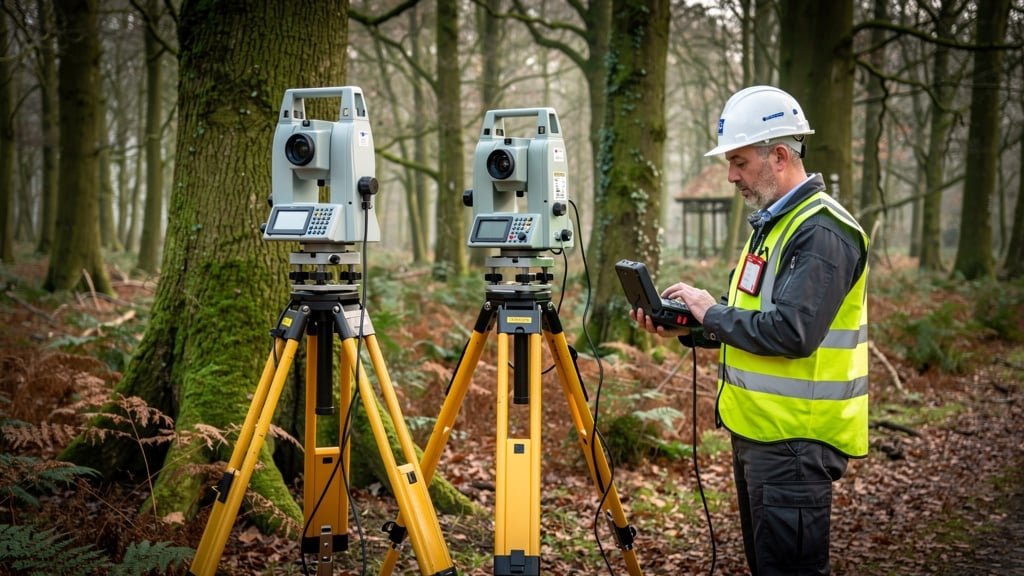
Trees add immeasurable value to properties and communities, but they also present constraints that developers must address carefully. When construction projects affect trees, UK planning authorities require comprehensive tree surveys following British Standard BS5837 to ensure developments protect valuable specimens while enabling necessary works. Topo Surveyor conducts professional tree surveys across the UK, helping developers navigate planning requirements while balancing tree protection with development needs.
This comprehensive guide explains tree surveys, demystifies BS5837 requirements, and shows how proper tree assessment supports successful planning applications while protecting important natural features. Whether you're planning a garden extension or major development, understanding tree survey requirements prevents costly delays and ensures compliance with planning conditions.
Understanding Tree Surveys and Their Purpose
Tree surveys document trees within and adjacent to development sites, recording their species, size, condition, and significance. Unlike basic topographical surveys that simply map tree positions, specialist tree surveys assess each tree's health, life expectancy, quality, and contribution to landscape character. This detailed assessment informs decisions about which trees can be removed, which require protection, and what mitigation measures developments must incorporate.
Planning authorities increasingly recognize trees as valuable community assets warranting protection. Mature trees provide environmental benefits through carbon sequestration, air quality improvement, urban cooling, and habitat provision. They contribute aesthetic and amenity value that enhances neighborhoods and property values. Loss of established trees represents environmental harm that planning policy seeks to minimize. Tree surveys provide the objective assessment framework that planning decisions require, balancing legitimate development needs against tree conservation.
The survey process involves qualified arboriculturalists visiting sites to assess every significant tree. Each tree receives individual evaluation covering species identification, size measurements including trunk diameter and canopy spread, structural condition and health assessment, estimated remaining lifespan, contribution to public amenity, and categorization indicating retention value. This systematic assessment creates comprehensive tree inventories that planning authorities use when determining applications and setting protection conditions.
Tree Protection Orders add another dimension to tree surveys. Local authorities place TPOs on individual trees or woodlands deemed important enough to warrant legal protection. Works affecting trees with TPOs require consent separate from planning permission, and unauthorized works constitute criminal offenses. Tree surveys identify TPO trees early in project planning, allowing developers to factor protection requirements or consent applications into timelines and budgets rather than discovering constraints late in processes.
British Standard BS5837 Requirements
BS5837 provides the framework that tree surveys and development proposals follow. This British Standard titled "Trees in Relation to Design, Demolition and Construction" establishes methodologies for tree assessment, protection measures, and development integration. Most UK planning authorities reference BS5837 in local plans and require developments to demonstrate compliance.
The standard categorizes trees using a quality grading system from Category A (highest quality) through to Category U (unsuitable for retention). Category A trees represent high-quality specimens with significant amenity value and long life expectancy—mature oaks in good health, landmark trees visible from public areas, rare or notable species. These trees should be retained unless overwhelming justification exists for removal, and developments must be designed around them. Category B trees represent moderate-quality specimens with at least 20 years life expectancy that developments should retain where feasible. Category C covers low-quality trees with minimal life expectancy or amenity value where removal may be acceptable for development reasons. Category U identifies trees in terminal decline or dangerous condition that should be removed regardless of development.
This categorization system provides planning officers with objective criteria for assessing development impacts on trees. Proposals removing Category A trees face scrutiny and might be refused unless compelling justification demonstrates no reasonable alternative exists. Category B tree loss requires balancing development benefits against tree value. Category C tree removal typically causes fewer planning concerns, though cumulative loss of multiple trees still matters. Understanding how trees categorize helps developers design sensitive schemes that retain valuable specimens while enabling viable development.
Root Protection Areas represent another critical BS5837 concept. The RPA defines ground zones where tree roots concentrate and where ground disturbance risks damaging tree health. BS5837 provides formulas for calculating RPAs based on trunk diameter, typically producing circular zones with 12-times-diameter radii. Development activity within RPAs—excavation, construction traffic, material storage, level changes—can severely damage or kill trees. Planning conditions routinely prohibit RPA incursion or require specialist protective measures where developments unavoidably affect these zones.
The standard prescribes protection measures for trees retained on development sites. Physical barriers prevent construction activity approaching trees inappropriately. Tree protection fencing following BS5837 specifications must be erected before construction begins and maintained throughout works. Ground protection prevents soil compaction within RPAs where construction access is essential. Arboricultural supervision ensures contractors follow approved protection plans. Planning conditions frequently require these measures, and breaches can result in enforcement action or prosecution.
The Tree Survey Process
Professional tree surveys follow systematic approaches ensuring comprehensive site coverage and consistent assessment. Understanding the process helps developers prepare appropriately and appreciate survey outputs.
Desktop research precedes fieldwork, examining aerial photographs to identify tree coverage extent, checking planning records for previous tree-related applications or conditions, reviewing TPO listings for protected trees on or near sites, and obtaining site plans for plotting tree positions accurately. This preparation ensures efficient fieldwork and helps identify trees requiring particular attention.
Site visits involve qualified arboriculturalists walking sites systematically to assess every significant tree. Trees are numbered sequentially for identification in reports and on plans. Positions are measured using GPS or referenced to site features, enabling accurate plotting on survey drawings. Species identification uses botanical knowledge recognizing distinctive features. Dimensional measurements capture stem diameter at standard breast height, tree height using clinometers or estimation based on experience, and canopy spread in multiple directions.
Structural assessment examines tree condition thoroughly. The surveyor looks for decay indicators like fungal fruiting bodies, cavities, or deadwood. Stability factors including lean, root heave, or soil condition receive evaluation. Health signs such as foliage density, leaf size, and dieback patterns inform condition judgments. Previous management including pruning quality and past damage affects assessments. This holistic evaluation determines whether trees are in good condition with long life expectancy or declining specimens with limited futures.
Categorization applies BS5837 quality grades based on assessment findings. High-quality trees with good health, structural soundness, significant size, and amenity value receive Category A status. Moderate specimens with reasonable life expectancy but less significance become Category B. Poor specimens with minimal value or limited lifespans are Category C. Trees in terminal decline, dangerous, or dead are Category U requiring removal. These categories directly influence planning considerations and development constraints.
Survey reporting compiles findings into documents that planning authorities and developers use. The tree survey schedule lists every assessed tree with its identification number, species, dimensions, condition, lifespan estimate, amenity contribution, and BS5837 category. The tree constraints plan shows tree positions plotted on site plans with RPAs illustrated and category coding color-coded for easy reference. The written report explains survey methodology, discusses significant specimens, identifies constraints affecting development, and provides recommendations for tree retention, removal, or protection. This comprehensive documentation supports planning applications and informs design decisions.
Tree Protection Plans and Method Statements
Tree surveys identify constraints, but tree protection plans and arboricultural method statements explain how developments will address these constraints. Planning authorities typically require these documents before granting permission for projects affecting trees.
Tree protection plans are detailed drawings showing how trees will be protected during construction. The plans illustrate retained trees with their RPAs highlighted, protective fencing positions following BS5837 specifications, construction exclusion zones where no activity occurs, ground protection locations for essential access across RPAs, and any special measures for high-value trees requiring extra protection. Planning officers use these plans to assess whether proposed protection measures are adequate for retaining trees successfully.
Color coding helps communicate tree status clearly on protection plans. Trees for retention appear in one color with their protective fencing shown. Trees approved for removal display differently. Trees on adjacent properties that could be affected by development also feature. This visual clarity helps everyone understand which trees are being protected and how.
Arboricultural method statements explain protection measure implementation in detail. The statement describes fencing types, installation methods, and maintenance responsibilities. It specifies ground protection systems where construction traffic must access RPAs. It explains how services will be installed near trees without damaging roots—perhaps using directional drilling under roots or hand-digging in sensitive areas. It covers arrangements for material storage, ensuring building supplies don't accumulate near trees. It establishes tree inspection schedules during construction to verify protection measures remain effective.
These documents become enforceable planning conditions. Developers must implement approved protection measures before construction begins, maintain protection throughout works, and allow planning officers or tree officers to inspect compliance. Failure to follow approved plans can result in stop notices halting works, enforcement action requiring remediation, and prosecution for damage to protected trees. Taking tree protection seriously from project outset prevents these serious consequences.
Designing Development Around Trees
The most effective approach to tree constraints involves designing developments that work with trees rather than against them. Skilled design can often achieve development objectives while retaining valuable trees that enhance projects and satisfy planning policies.
Building positioning represents the primary design consideration. Locating structures outside tree RPAs avoids conflict entirely. Sometimes modest building shifts of several meters preserve important specimens without significantly compromising development layout. Exploring design variations during early stages identifies options that retain trees while meeting functional requirements. This flexibility becomes limited once designs are fixed, so early tree survey commissioning allows tree constraints to inform layout decisions rather than becoming obstacles discovered late.
Plot layouts can be configured to preserve tree groups or individual specimens as landscape features. Rather than clearing sites completely, developments might cluster buildings to leave wooded areas intact. Trees become positive features—focal points in communal gardens, natural boundaries between properties, or attractive outlooks from windows. This integration of existing trees creates more mature, characterful developments than cleared sites with new planting struggling to establish.
Access routes and services corridors offer opportunities for tree retention optimization. Positioning drives and paths between tree groups rather than through them avoids unnecessary removal. Service trenches can be routed to minimize tree impact, perhaps consolidating utilities in shared trenches or using alternative installation methods near valuable trees. Underground services represent major tree threats during construction, so careful routing informed by tree surveys protects trees while providing necessary infrastructure.
Foundation design adaptation can enable building near trees where conventional foundations would risk RPA incursion. Specialized foundation systems like piled foundations carry loads deeper without requiring wide excavations near trees. These solutions cost more than standard foundations but prove worthwhile when they enable developments to proceed while retaining valuable trees that would otherwise require removal.
Boundary treatments and landscaping should respect existing trees. Fencing and walls must be positioned carefully to avoid damaging roots during installation. New planting should be located where it won't compete with established trees or require future removal as it matures and conflicts with buildings. Landscape designs can enhance existing trees through complementary planting rather than replacing mature specimens with immature stock needing decades to develop comparable value.
When Tree Removal Becomes Necessary
Despite best efforts to retain trees, some developments cannot proceed without removing specimens. Understanding how to justify removal and what mitigation planning authorities expect helps manage these situations appropriately.
Justification for tree removal must demonstrate that alternatives have been thoroughly explored. Planning authorities expect evidence that building layouts were adjusted to avoid trees, that access routes were varied to minimize impact, that construction methods were considered to reduce tree harm, and that retention attempts would create greater problems than removal. Simply stating that trees inconvenience development proves insufficient—developers must show that reasonable design alternatives don't exist or would create worse outcomes.
Category grading influences removal acceptability. Category C and U trees may be removed relatively easily if necessary for development, as their limited value doesn't warrant significant development constraint. Category B tree removal requires stronger justification showing material benefits from development outweigh moderate tree value loss. Category A tree removal faces greatest scrutiny, and planning authorities may refuse schemes removing high-quality specimens unless truly exceptional circumstances exist where overwhelming public benefits clearly outweigh tree value.
Mitigation through replacement planting addresses tree loss. Planning conditions commonly require new tree planting to compensate for removed specimens. The replacement ratio depends on removed tree value—one Category C tree might require one replacement, while one Category A tree could require three or more replacements. Replacement species should be appropriate for locations and provide similar benefits to lost trees over time. Planting must be properly maintained, and planning conditions typically require replacements if planted trees die within five years.
Financial contributions might be required where on-site replacement planting isn't feasible. Developers might pay into local authority tree planting programs or contribute to off-site woodland creation. These arrangements acknowledge that tree loss represents environmental harm requiring compensation even when development proceeds.
Tree Preservation Orders and Conservation Areas
Legal protections add complexity to tree management that developers must navigate carefully. Ignoring these protections can result in serious legal consequences beyond planning refusal.
Tree Preservation Orders protect individual trees, groups, or woodlands that local authorities consider important for amenity value. Works affecting TPO trees—pruning, felling, topping, lopping, or damaging—require consent applications to local authorities regardless of whether planning permission is needed. Consents specify exactly what works are permitted and often include conditions about replacement planting or ongoing tree management.
Undertaking works to TPO trees without consent constitutes a criminal offense potentially resulting in unlimited fines. Local authorities take enforcement seriously, and courts impose substantial penalties reflecting tree value destroyed. Additionally, authorities can require replacement planting at developer expense and pursue compensation for public amenity loss. The legal risks of unauthorized TPO tree works far exceed any time or cost savings from avoiding consent applications.
Conservation areas provide automatic protection to all trees above certain size thresholds. Anyone proposing to cut down or significantly work on trees in conservation areas must give the local authority six weeks' notice, allowing them to assess whether TPOs should be placed. This notification requirement applies even to trees that aren't specifically protected by orders, creating a safety net preventing sudden tree loss in sensitive historic areas.
Developers should identify TPO trees early through tree surveys and desktop research. Council records show where orders exist, and tree surveys note TPO status. Early identification allows consent applications to proceed in parallel with planning applications, avoiding timeline delays. Some planning permissions include conditions requiring TPO consent before work begins, coordinating both approval processes.
Working with Professional Arboriculturists
Tree surveys require specialist expertise beyond general surveying qualifications. Professional arboriculturists bring botanical knowledge, structural assessment skills, and BS5837 understanding that ensures survey quality and planning authority acceptance.
Qualifications matter when selecting tree survey providers. Professional arboriculturists typically hold qualifications from organizations like the Arboricultural Association, International Society of Arboriculture, or Royal Forestry Society. These qualifications require extensive training and examination in tree biology, assessment methods, and management practices. Our topographical surveyors work with qualified arboriculturists to deliver tree surveys that meet professional standards.
Experience with planning applications proves valuable. Arboriculturists familiar with local authority expectations know what information planning officers need, how to present findings effectively, and what protection measures will satisfy conditions. This experience streamlines approval processes and reduces revision requests that delay projects.
Coordination between tree surveys and broader topographical surveys ensures comprehensive site documentation. Our land surveyor team works closely with arboricultural specialists to create integrated survey deliverables where tree data appears on the same base plans as other site features. This integration helps architects and engineers see tree constraints alongside topography, boundaries, and utilities, enabling holistic design responses.
Conclusion: Balancing Development and Tree Protection
Trees represent valuable assets that planning policy seeks to protect, but they needn't prevent appropriate development. Professional tree surveys following BS5837 provide the framework for balancing development needs with tree protection, enabling projects to proceed while safeguarding important specimens. Understanding tree survey requirements and incorporating them early in planning processes leads to better outcomes for developers, communities, and the environment.
At Topo Surveyor, we provide professional tree surveys conducted by qualified arboriculturists who understand planning requirements and BS5837 compliance. Our surveys support successful planning applications while ensuring developments address tree constraints appropriately.
If your project affects trees, get in touch with our survey experts. We'll assess your tree survey needs, coordinate with planning requirements, and deliver professional tree assessments supporting your development goals while protecting valuable natural features.
Professional Tree Surveys and BS5837 Assessment
Our qualified arboriculturists conduct comprehensive tree surveys following BS5837, supporting planning applications and ensuring compliance with tree protection requirements.
Ensure BS5837 Compliance with Expert Tree Surveys
Our arboricultural surveys ensure your development complies with British Standards BS5837. We provide comprehensive tree protection plans and impact assessments for planning applications.